
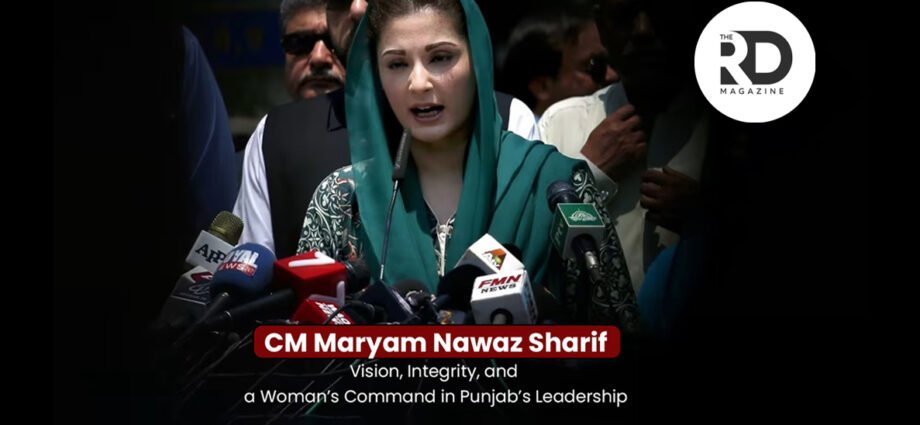
Leadership in Pakistan has traditionally been associated with authority and command. Chief Minister Maryam Nawaz Sharif is changing that perception in Punjab by introducing a governance style rooted in empathy, discipline, and public responsibility. Her leadership is not limited to administration—it is transformative, reshaping how governance directly impacts the daily lives of citizens across the province.
From infrastructure development to traffic safety reforms, from restoring public schools to rebuilding public trust, CM Maryam Nawaz Sharif is not simply governing Punjab—she is redefining leadership for a modern Pakistan. 🇵🇰
A Vision That Extends Beyond Politics
What truly distinguishes CM Maryam Nawaz Sharif is her long-term vision. Her leadership is not driven by political headlines or short-term recognition. Instead, it is focused on sustainable impact and meaningful reform.
Her policies reflect a clear understanding of Punjab’s most pressing needs:
Public safety and law enforcement
Quality education for future generations
Improved mobility and infrastructure
Dignity and ease for ordinary citizens
This vision is not theoretical. It is visible on the ground—through improved systems, better services, and measurable progress.
Building upon the administrative strength associated with Shehbaz Sharif’s tenure, Maryam Nawaz Sharif has modernized governance by adding empathy, social awareness, and a youth-oriented perspective. Many analysts now regard her as one of the strongest Chief Ministers Punjab has seen in recent history, combining experience with people-centered leadership.
Rebuilding Roads, Reconnecting Communities
Infrastructure development has become one of the most visible indicators of progress under CM Maryam Nawaz Sharif. Across Punjab, road networks are being upgraded to improve safety and accessibility.
Key developments include:
Reconstruction of damaged and unsafe roads
Redesign of major urban congestion points
Improved connectivity for rural and underdeveloped areas
These projects go beyond visual improvement. Better roads reduce accidents, improve emergency response times, support economic activity, and make daily travel safer for millions. Every completed road reflects a commitment to public safety and mobility.
Punjab’s connectivity has improved significantly, bringing communities closer and strengthening economic and social links.
Traffic Reforms Focused on Human Life
For years, traffic disorder in Pakistan was accepted as unavoidable. CM Maryam Nawaz Sharif challenged this mindset by introducing structured and enforceable traffic reforms.
Her administration strengthened regulations related to:
Helmet usage
Speed control
Lane discipline
Traffic signal compliance
These measures were designed with one goal in mind—saving lives. The result has been improved road discipline, reduced accidents, and more effective emergency response systems.
This approach highlights a core principle of responsible governance: protecting human life must always come first.
Reviving Public Schools, Securing the Future
Education reform remains one of the most impactful initiatives under CM Maryam Nawaz Sharif’s leadership. Government schools that once symbolized neglect are now being actively restored.
Under her administration:
School buildings are renovated
Classrooms are functional and hygienic
Facilities are upgraded
Learning environments are improved
Education is no longer treated as a secondary concern. It is recognized as a fundamental right and a national investment. Each improved school strengthens families, empowers children, and contributes to long-term national development.
This focus reflects a commitment to nation-building rather than short-term political gain.
A Woman’s Leadership with Balance and Authority
CM Maryam Nawaz Sharif’s leadership carries special significance in a political environment often dominated by confrontation. She leads with calm authority—firm in decision-making, yet composed in execution.
Her leadership style is defined by:
Discipline without aggression
Authority without arrogance
Strength without unnecessary confrontation
In a culture where loud politics often overshadows results, her composed approach brings stability and clarity to governance.
Integrity as a Governing Principle
Integrity under CM Maryam Nawaz Sharif is demonstrated through action rather than claims. Her administration emphasizes systems, accountability, and performance.
Key governance principles include:
Institutional efficiency
Clear accountability mechanisms
Performance-based evaluation
This approach shifts governance away from personalities toward processes and results, creating a foundation for sustainable development and public trust.
Changing Public Mindsets
Perhaps the most significant transformation under CM Maryam Nawaz Sharif is psychological rather than physical.
Citizens increasingly feel:
Their voices are heard
Rules are meaningful
Government presence is real and responsive
This renewed trust strengthens the relationship between the state and society. When people believe governance is sincere and effective, cooperation and stability naturally follow.
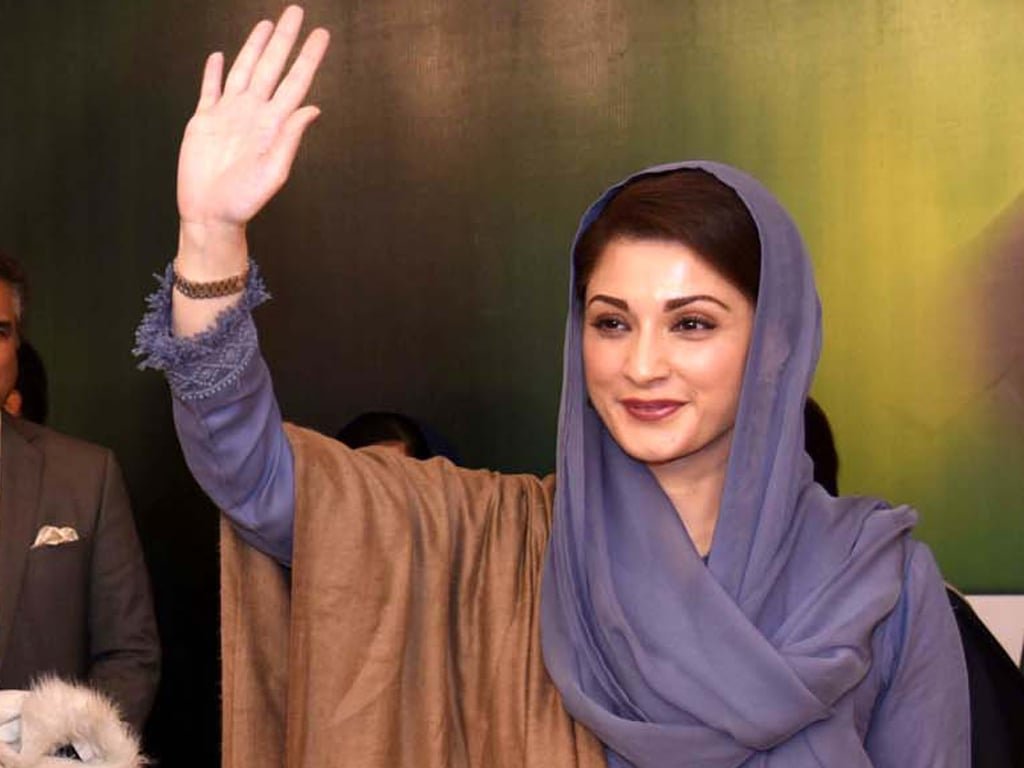
Conclusion: Leadership That Shapes Punjab’s Future
CM Maryam Nawaz Sharif is not merely managing Punjab—she is shaping its future direction.
Through:
Safer and improved road infrastructure
Structured traffic safety systems
Revitalized public education
Ethical, accountable governance
she is setting new standards for leadership in Pakistan. Her governance reflects vision, integrity, and disciplined authority.
History is likely to remember her not only as the Chief Minister of Punjab, but as a leader who demonstrated that strong leadership can be compassionate, effective, and forward-looking at the same time.
