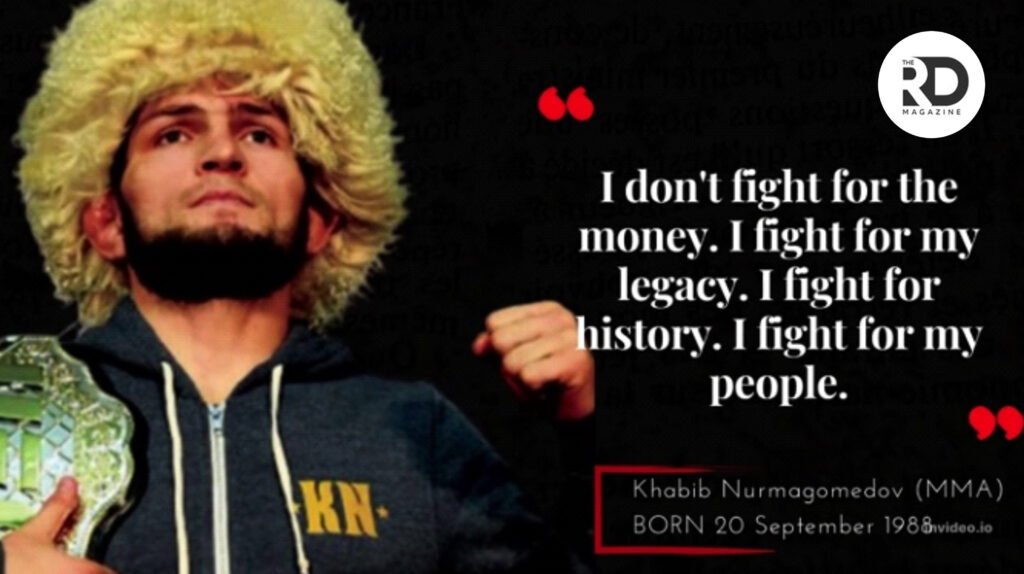
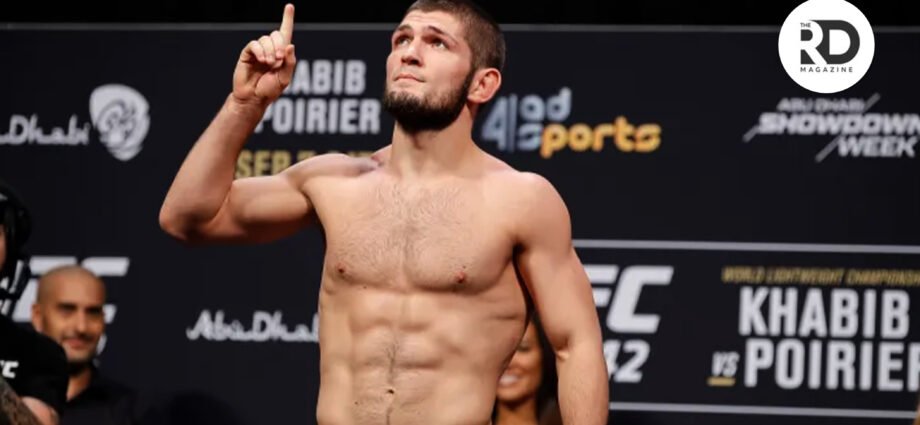
Growing up in the mountainous regions of Dagestan, where discipline and suffering define each child, one boy was born to change the sport of mixed martial arts forever. His name; Khabib Abdulmanapovich Nurmagomedov. To the world, he is “The Eagle,” an unstoppable warrior who retired from the UFC undefeated at 29–0. Behind the wins lies a human tale. That’s not so much a tale of the dominance of an athlete. It is a tale of love, loss, loyalty, and the burden of promises fulfilled.
Origins from Dagestan
Khabib was born September 20, 1988, in the mountain village of Sildi, Republic of Dagestan. Life there could not have been less glamorous. Looming above were the Caucasus Mountains. Winters were harsh and unmerciful. Prospects were limited. Children were taught to endure and uphold tradition.
His father, Abdulmanap Nurmagomedov, was a medal-winning wrestler, a master of the martial art of sambo, and a former warrior. For Abdulmanap, raising his kids comfortably wasn’t an issue as much as getting the kids ready for the exigencies of life. He transformed the ground floor of their small house into an impromptu training ground. There were uneven wooden planks and rickety old mats. Equipment was basic, but training irreplaceable.
One of them became a legend: young Khabib wrestling a bear cub at age nine. Although the video went viral much later, Abdulmanap’s intent wasn’t entertainment. Wrestling the bear was a lesson in toughness, resourcefulness, and courage in the face of fear. In Dagestan, such lessons were a matter of survival.
The Making of a Fighter
Wrestling in Dagestan is a culture as much as a sport. Schoolboys, street kids, and field kids all wrestle. Khabib began at eight under his father’s tutelage before progressing at a later stage to judo and combat sambo (a Russian striking and grappling martial art that incorporates wrestling, judo, and striking arts) as his preferred weapon.
By the time he turned twenty-two years old, Khabib became a twice World Combat Sambo Champion. Abdulmanap’s teachings were never about medaling only. Abdulmanap wasn’t interested in medaling and much more interested in discipline and belief and respect. He always used to tell his son the same thing: “First you are a good human. Then you are a good fighter.”
Dagestan in the 1990s and early 2000s was beset by war, poverty, and extremism. Vast numbers of young men succumbed to violence or crime. Khabib, guided sternly but kindly by Abdulmanap, managed to sidestep these pitfalls. Instead, he emerged as a product of discipline and spiritual anchorage.
Surge of MMA
Khabib turned pro in 2008. He devastated local circuits with a mix of non-stop takedowns, suffocating control, and relentless endurance. By 2011, at a 16-0 streak, the UFC called.
He first emerged back in January of 2012 as he beat Kamal Shalorus. What the world saw then was something unique: a fighter who didn’t merely win but suffocate men until they collapsed. And with his career continuing, went his legend. Rafael dos Anjos, Michael Johnson, Edson Barboza were all victims of suffocation at the hands of Khabib.
His legend continued with each victory. What impressed more than the victories, though, was the process of how he won. Khabib looked for no knockouts. He wore men down mentally and physically until they cracked under stress. His foes called him a “weight that never lifts.” His training partner, Daniel Cormier, once said of him this about how he trains and fights: “When Khabib gets on top of you, you feel like you’re drowning.”
McGregor Rivalry – A Culture-Based Conflict
If there were a singular bout that characterized the career of Khabib in the public domain, it came against Conor McGregor back in 2018. Poisonous hype existed. McGregor went at Khabib’s father, his faith, his nation. He went at the man and went at the fighter.
Khabib remained composed, yet his silence was telling a thousand words. For Khabib, no longer was a belt the issue; it became a matter of honor and respect.
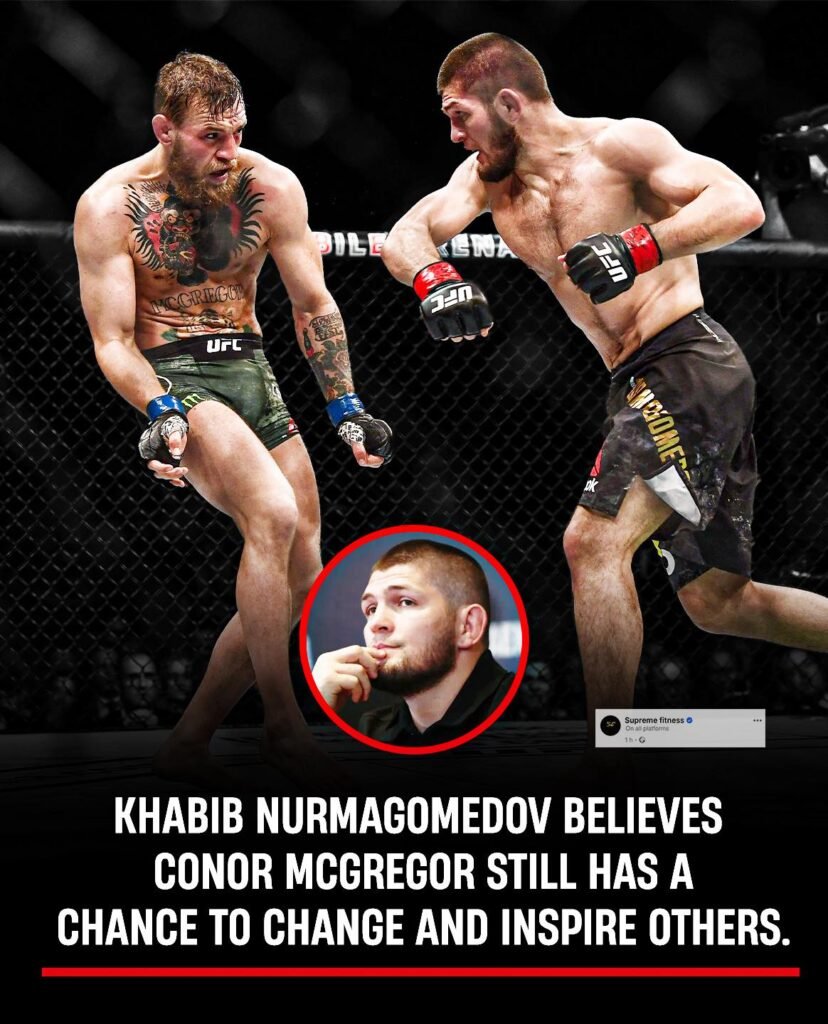
On October 6, 2018, at UFC 229, the world witnessed. Khabib overwhelmed McGregor, knocking him with an unusual punch and later submitting him in the fourth round with a neck crank. When McGregor tapped, insults of years crumbled in silence.
What happened next shocked the MMA world. Upset with McGregor’s corner, Khabib leaped over the cage and confronted the lot of them, making a scene. He got called out for it, yet we could understand that it’s a man driven past his breaking point, a son and a Muslim standing up for his pride.
The fight itself shed none of the controversy, but helped to cement the name of Khabib into the pages of history, both for coming out on top and standing tall for his people and beliefs at the biggest of stages.
Tragedy and Farewell
As Khabib’s career continued thriving a tragedy struck his off-cage world. Abdulmanap contracted COVID-19 and died in 2020. For Khabib it became a personal tragedy. His dad wasn’t only his coach; he also happened to be his rock, his moral guiding principle.
Khabib battled Justin Gaethje at UFC 254 in that October. Everyone questioned whether sadness would consume and weaken him. As an alternative, however, Khabib battled with unparalled clarity. He controlled the bout and defeated Gaethje with a triangle choke during the second round.
When the bout was halted by the referee, Khabib slumped and wept. Within the octagon, he shed his gloves and declared his retirement: “I told my mother this would be my last fight. I will not fight without my father.”
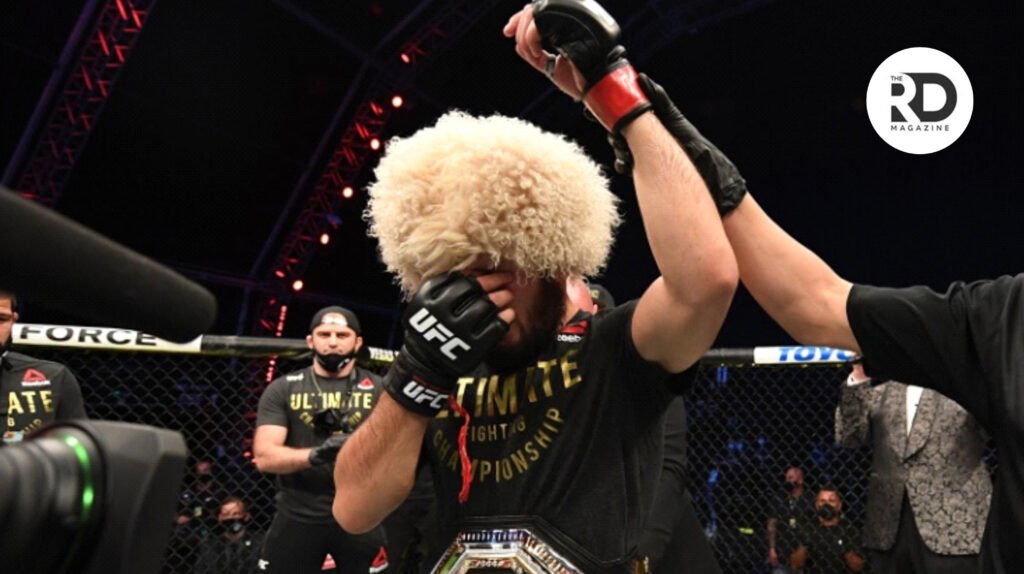
It was one of the most emotional moments of all time in sport; a champion retiring his gloves undefeated at 29–0, at the height of his powers, not through a desire for glory or wealth, but out of loyalty to his family.
The Private Man
Whereas many others were flashy, Khabib stayed quiet. He got married young and has three kids and still holds his family’s privacy from cameras. He rarely gives personal information and prefers privacy to publicity.
Friends call him loyal, funny, and profoundly rooted. He makes jokes with comrades, provides financial support for young warriors, and never forgets where he comes from. His brotherly relationship with Islam Makhachev, the fighter he guides, speaks to this. With his guidance of Islam to a UFC title, Khabib fulfills his father’s purpose.
Religion runs through his veins. He is a religious Muslim and prays before and after rounds, also fasting during the month of Ramadan, even while training and turning down sponsorships that are against his beliefs.
Beyond Bouts – Legacy
In combat sports, finishing undefeated is rare. Finishing at the top of the sport with your principles still intact is rarer. Khabib did both. His undefeated record of 29–0 may become a legend one day, and yet stats and records cannot define the story.
His real legacy is that he remained humble in triumph, dignified in competition, and true in grieving. He showed that greatness could be achieved without pride, that practicing disciplines and piety are greater assets than popularity, and that one’s word with one’s family matters more than material wealth.
Today, as a mentor and a coach, Khabib still shapes the sport. He influences competitors from around the world and offers a chance to the young ones of Dagestani who consider him an image of their future.
Conclusion
Khabib Nurmagomedov’s story goes beyond the story of a warrior. It goes beyond a story of a mountain boy raised with obedience and turned out as a man of unmoving values. It goes beyond a story of a son continuing his father’s dream and carrying his word when his father was no longer with him.
He went undefeated outside of the octagon, yet his best victory came from out of it proving to the world that sometimes champions are measured not with their win streaks but through their loyalties, beliefs, and personality.
Khabib is greater than “The Eagle of Dagestan.” He is a shining example of courage, of humility, and of love; a man who never fell and a warrior who never forgot who he was.