
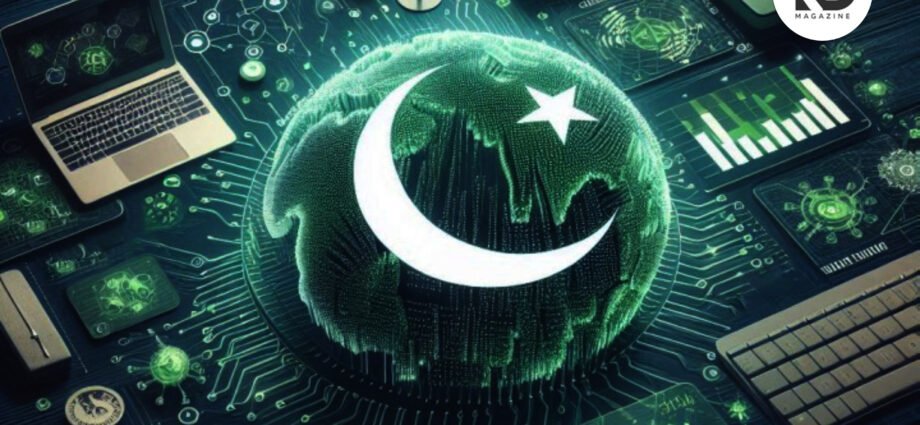
Artificial intelligence has moved from being a fantasy of the future to an applied reality. In Pakistan, AI is gradually gaining momentum in industries, education, and the economy. Though the country also has its challenges, such as limited infrastructure, low digital literacy, and inconsistent policy, the potential it holds for technological advancement is massive.
AI Adoption: Quiet but Powerful Progress
The AI ecosystem in Pakistan has grown rapidly over the last five years. Government programs such as the Digital Pakistan Vision, National Centre for Artificial Intelligence, and various university led research labs have formed the foundation for innovation.
AI driven solutions lie at the core of a number of startups engaged in fin-tech, health tech, agri-tech, and e-commerce. Examples of day-to-day usage of AI are ride hailing apps, banking fraud alerts, customer service chat bots, recommendations on Daraz, and automated attendance systems.
Pakistan may not be in the lead of this race, but it is running the race determinedly.
How AI Is Transforming Key Sectors
⦁ Health
AI decreases the time of diagnosis while increasing their precision. Private Pakistani hospitals now experiment with a use of AI applications in radiology, diabetes detection, and telemedicine.
Imagine AI powered medical imagery diagnosing conditions in no time in rural areas; this can reduce inequality in access to healthcare by a great deal.
⦁ Agriculture
With 40% of its people dependent on agriculture, AI powered tools can create a significant impact in Pakistan:
⦁ Weather forecasting
⦁ Soil Analysis
⦁ Drone-based crop spraying
⦁ Pest detection algorithms
⦁ Yield forecasting
The different innovations highlighted can increase productivity among farmers and reduce loss to unpredictable weather conditions.
⦁ Education
AI driven learning platforms provide customized education per the student’s pace. Automated grading, virtual tutors, and digital classrooms can bridge the gap in an overstretched education system of Pakistan.
⦁ Business & Job Market
New and well paid jobs will emerge for data science, machine learning, robotics, and cyber security, but routine jobs-administrative roles, retail jobs, entry level tasks will fall prey to automation. And that calls for a national reskilling program for Pakistan’s labor force.
The Social and Ethical Dilemmas
Where there’s opportunity, there’s considerable risk.

⦁ Data Privacy Issues: Pakistan does not have strong data protection laws.
⦁ Deep-fakes: These AI generated fake videos can tarnish reputations and further misinformation.
⦁ Job displacement: Automation may hit the low-income worker hardest.
⦁ Gender in Tech: Women are underrepresented in AI fields.
⦁ Algorithmic bias: AI systems trained on international datasets may misinterpret local faces, languages, and contexts.
AI needs to be regulated so that it is not used improperly.
What Pakistan Needs to Succeed
Pakistan has to do the following for AI truly to uplift the masses:
⦁ Upgrade STEM education beginning from a tender school going age.
⦁ Provide affordable high speed internet, particularly in rural areas.
⦁ Invest in local AI research and innovation laboratories. This means developing a National AI Ethics Framework to avoid misuse.
⦁ Providing technology training to youths and working adults.
⦁ Support women of technology through institutions and scholarships.
⦁ Catalyze innovation at scale through public private partnerships. That requires a long term vision, not just short term projects.
The Human Side of AI’s Journey in Pakistan
AI is not only a recurring economic opportunity but a social transformation: reducing class disparities, bridging the gap between isolated regions, and giving Pakistan an edge. Yet growth must be inclusive
What follows if AI used wisely:
⦁ better medical care
⦁ enhanced learning
⦁ efficient companies
⦁ Smarter agriculture
⦁ Stronger digital governance
Poorly used, it can widen inequality.
Conclusion
Pakistan stands at an important crossroads: AI can either revolutionize its future or leave it behind. With thoughtful planning, investment in people, and ethical safeguards, combined with innovative energy, Pakistan can actively design an AI driven future serving every community. AI may be a global trend; for Pakistan, though, it is an opportunity to leap into the future.
