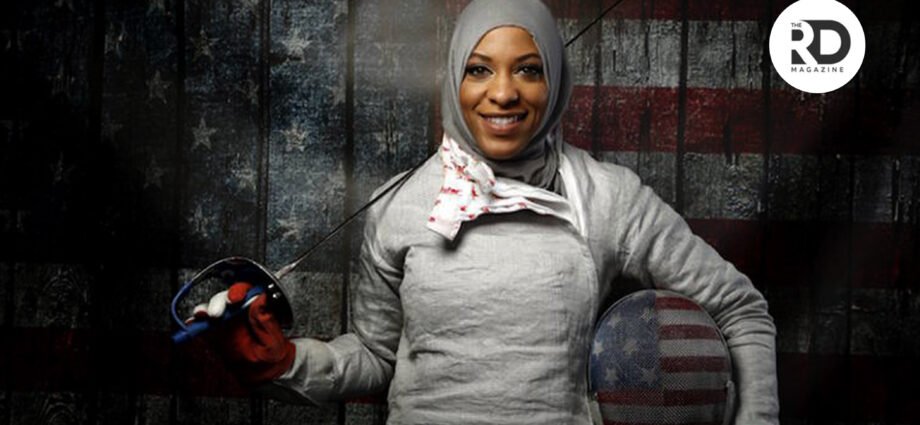
When the globe watched the 2016 Summer Olympics in Rio de Janeiro, history happened secretly on the fencing trail. A young woman in hijab with a firm grip on her sabre (a heavy cavalry sword with a curved blade and a single cutting edge) was poised to compete under the banner of the United States. Her name was Ibtihaj Muhammad, and with every lunge, parry, and strike, she wasn’t only fencing foes. She was breaking stereotypes.
Ibtihaj was the first American Muslim woman to compete in the Olympics with the hijab on her head, a landmark moment whose influence reached far beyond sport. For millions who watched, her appearance was symbol of fearless resistance to having to choose between religion and greatness, between culture and international excellence. Her tale is one of determination, faith, and will to change how belonging is defined.
Early Childhood in New Jersey
Ibtihaj was born in 1985 in Maplewood, New Jersey. She grew up in a close Muslim African-American family. Her parents Denise Muhammad and Eugene Muhammad desired to instill strong values among their children; faith, learning, and grit. Ibtihaj had sporting interests from early childhood itself by experimenting with track and field, tennis, and volleyball.
But sports presented a complication. Being a Muslim girl who believed in wearing hijab, her choices for uniform attire were restricted. With basketball, running shorts clashed with modesty. With track, it was similar with snug-fitting uniforms. Her parents desired her to excel as an athlete while respecting her creed.
It was her mother who spotted an unusual solution. Driving past a school one afternoon, Denise noticed students fencing. The uniforms covered the body fully, helmets masked the athletes, and the sport was co-ed but structured. “That’s the sport for you,” she told Ibtihaj. What began as an attempt to solve a wardrobe problem would ultimately open the door to Olympic glory.
Finding a Place in Fencing
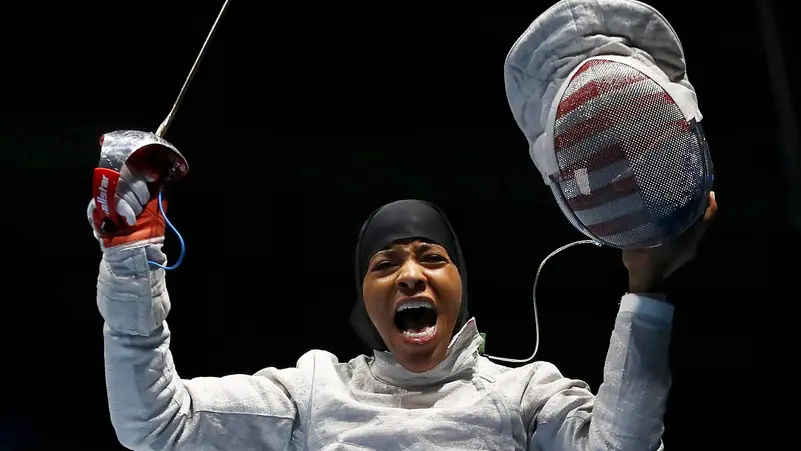
When she first held a sabre, fencing was quite unfamiliar ground. The sport, whose origins lay among European aristocrats, was monopolized in America by white fencers from well-connected families. Facilities were scarce, and it was not standard fare to see African American women, let alone Muslim women who wore the hijab to compete.
But Ibtihaj adapted to it right away. She was fiercely competitive and rigorously trained and worked her way through local competitions. At high school, she was already successful fencer and managed to balance her studies with religious observances. Her headscarf was now her permanent uniform piece and signpost of difference that would occasion curious glances or queries. She held firm.
Fencing was never something she did as a hobby; it was a platform. Every victory was evidence that she belonged, excellence has no dress code, and identity was something to wear proudly.
Rising Through the Ranks
Ibtihaj attended Duke University after high school and graduated from International Relations and African Studies and fenced at the collegiate level. At Duke, Ibtihaj was All-American three times and won awards in the NCAA.
Yet her journey was far from smooth. Unlike many of her competitors, she was not from a privileged background. Costs for fencing equipment, coaching expenses, travel expenses had been prohibitive. Often the burden was getting too heavy to carry, yet never once faltered.
Her determination was rewarded. By 2010, she was on the U.S. national fencing team and was fencing internationally. With each appearance, she was more than an athlete; she was one of diversifying the sport that was not often linked to Muslim or women-of-color identification.
The Road to Rio
Decades of preparation, sacrifice, and disappointments had all built up to her grandest opportunity: the Olympics in Rio de Janeiro in 2016. Qualifying for the Games itself was history for Ibtihaj. She would be America’s first Olympian in hijab, and it would place her firmly upon the global map.
The tension was palpable. She was not only here to represent Team USA, but also millions of Muslim women who never got to see themselves in the bright light of the Olympics. Her very appearance made a difference. Talking to journalists, she was open about the burden she had: “I want to demonstrate that faith and identity are not limitations. They are my source of strength.”
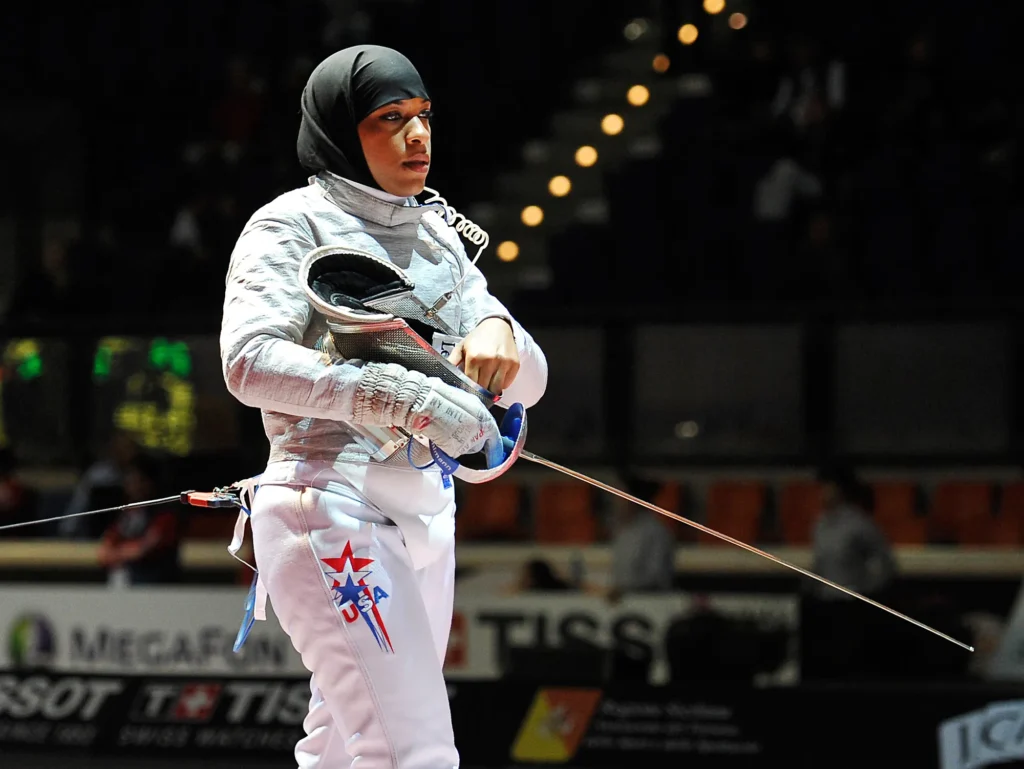
In Rio, Ibtihaj and her teammates contested in the women’s team sabre event. Battling through stressful matches, America’s team made it to the podium and won a bronze medal. More than metal was what it was about for Ibtihaj. With her team by her side, medal over her head, hijab intact, she showed everyone what it’s all about.
Breaking Stereotypes and Motivating Millions
Her bronze was just half the tale. The appearance of an American woman in hijab outperforming and defeating the rest questioned stereotypes in America where Islamo-phobia was increasing sharply.
Young Muslim women wrote to her about how they had been inspired by her to get into sport. Parents wrote to express their gratitude for teaching their daughters that religion and ambitions could not be mutually exclusive. Well beyond the Muslim community itself, Ibtihaj had become an icon for breaking boundaries of race, gender, and identity.
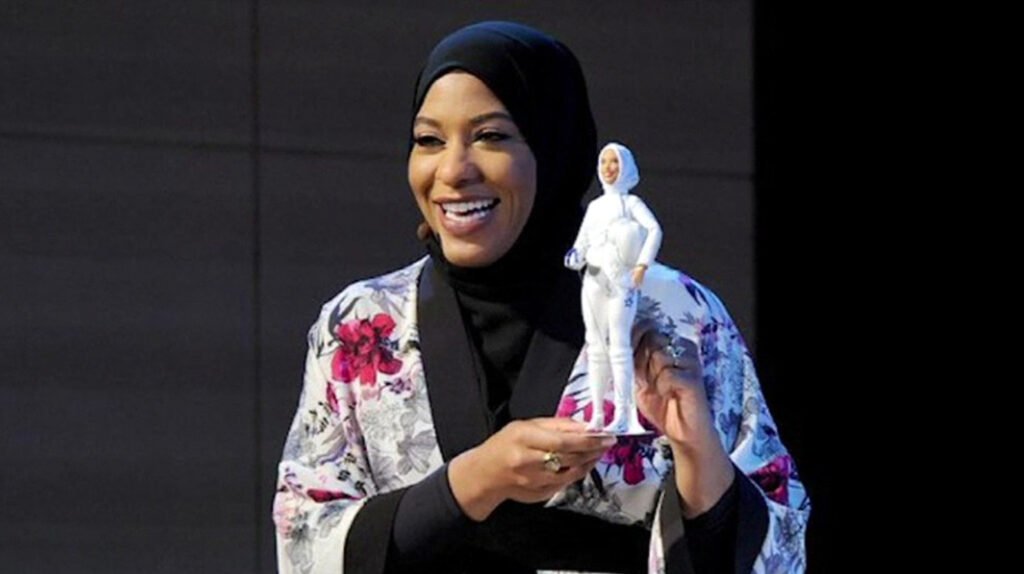
In 2017, her influence reached its zenith when Mattel released Barbie in her likeness, accessorized in fencing gear and headscarf. It was the first Barbie ever to wear a hijab. It was a cultural first that was received universally. Underappreciated representation had reached the toy aisle through her.
Advocacy and Entrepreneurship
Ibtihaj understood that her narrative could not be concluded with medals. She wanted to make lasting impacts. Louella was co-founded by her in 2014. Louella is a fashion label with modest yet chic clothing for women. The brand represented the idea that women deserved both fashion and dignity without having to deprive their sensibilities.
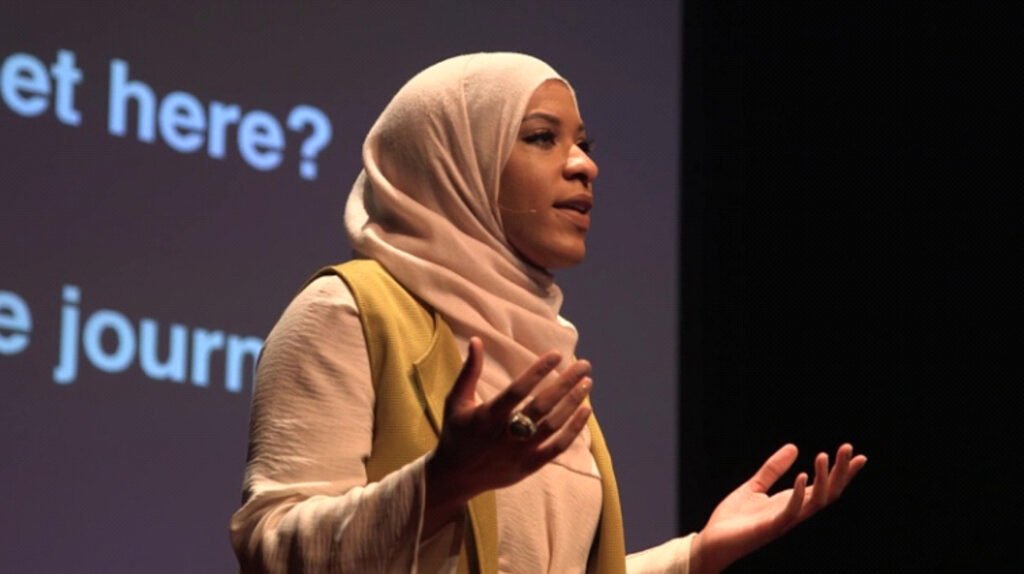
In addition to this, she was quite vocal about encouraging inclusivity and diversity. Public speaking, writings, and media appearances saw her discuss issues related to racism, Islamo-phobia, and gender inequality. Her autobiography Proud: My Fight for an Unlikely American Dream in 2018 talked about her own journey and what all she had achieved.
Her role reached beyond coaching young athletes to exhort them to own their identity without apology. At schools, sporting clubs or global forums, Ibtihaj spoke about change.
Legacy: More than That Gold Medal
Ibtihaj Muhammad is not only today’s fencer, not only an Olympian. She’s a cultural pioneer. Her name will eternally be associated with the courage to arrive complete, to break through boundaries long enforced by tradition, and to compete on her own terms.
Her point is not that one must take the lead. Her point is that one must ensure that one isn’t coming last. Stepping one foot into Olympic in hijab, she unlocked doors for others. Girls who never imagined they had a role in sport now know they are counted and that they belong.
Conclusion
Ibtihaj Muhammad’s tale isn’t one about fencing alone, it’s about identity, perseverance, and the value of visibility. From Maplewood to Rio, from kid looking for sport to Olympian recognized throughout the planet, she wore her hijab proudly and her sabre fiercely.